.png)
Maximizing Shift Fill with Dynamic, Algorithmic Nurse Pay
Role: Director of Revenue Strategy & Analytics, Carelytics
Overview
At Carelytics, I spearheaded the launch of a dynamic pay-rate system designed to increase nurse shift “Fill Rate”—the percentage of posted hours worked and paid—at long-term care facilities. Our main challenge was that a significant portion of shifts went unfilled, primarily due to a lack of nurse applicants. Feedback pointed to pay rates as a top concern.
Solution Design & Launch
To tackle this, I led a cross-functional team in implementing a predictive, data-driven algorithm (the "Boosted Rates" feature) that automatically increased pay rates for shifts unlikely to receive applicants. The system leverages real-time data ingestion and cloud infrastructure:
- Real-Time Data Pipeline: Uses BigQuery, dbt models, and a machine learning inference process hosted on Kubernetes.
- Algorithm: Generates synthetic scenarios to estimate the impact of pay increases, helping identify shifts where a boost would maximize ROI.
- Budget Controls: Prioritizes boosts within strict budget caps, ranking by predicted marginal benefit and expected additional fill.
Impact & Results
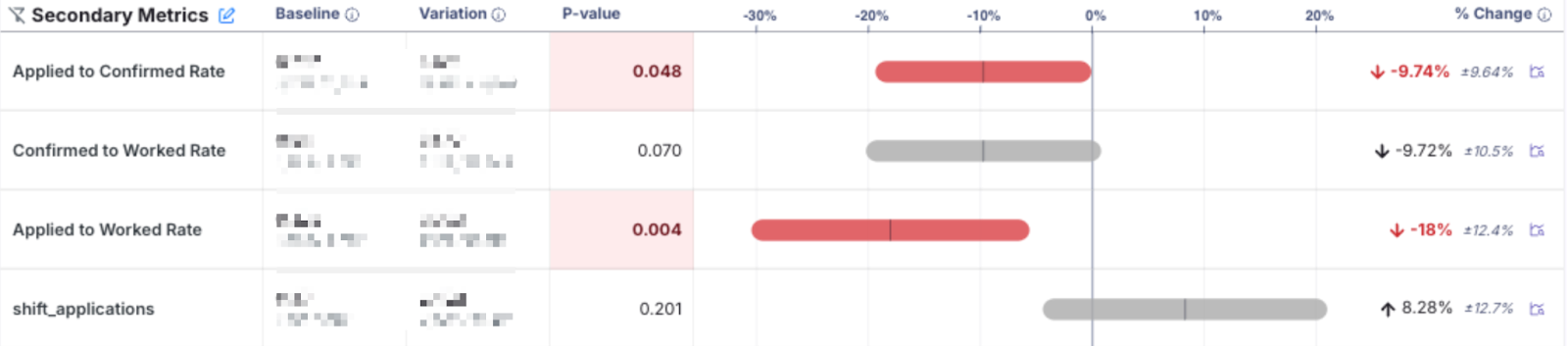
Initial experiments showed mixed results—while some "boosted" shifts showed higher fill rates after tuning, the uplift was not always statistically significant. We iterated rapidly, expanding parameters and increasing budget control, resulting in encouraging trends such as a temporary upturn in shifts filled following adjustments.
Data Science Approach
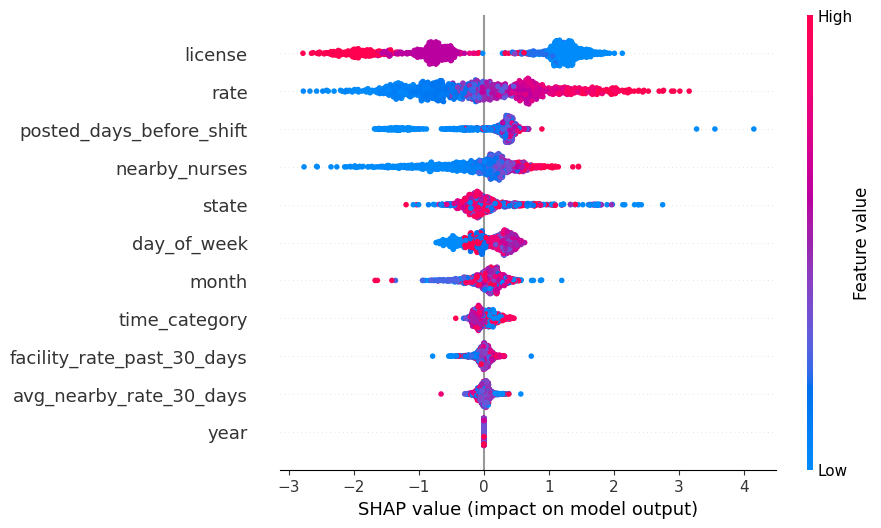
- Modeling: Used XGBoost trees and SHAP analyses to predict both likelihood to apply and ultimately work shifts.
- Experimentation: Designed randomized trials with test and control groups via Growthbook, tracking key metrics: Fill Rate, Hours Worked, and Applied-to-Worked conversion.
- Iterative Refinement: Incorporated feedback loops, model retuning, and began exploring advanced techniques (bandit algorithms, switchback tests) to mitigate confounding marketplace effects.
Business Takeaways
- Budget and model tuning can drive short-term improvements, but deeper behavioral change and robust statistical proof are key to long-term adoption.
- Machine learning and experimentation platforms enable rapid, evidence-based operations improvements but require careful setup to avoid bias.
- Building capacity for ongoing optimization and multi-factor interventions (like push notifications) is essential in two-sided marketplaces.
Next Steps
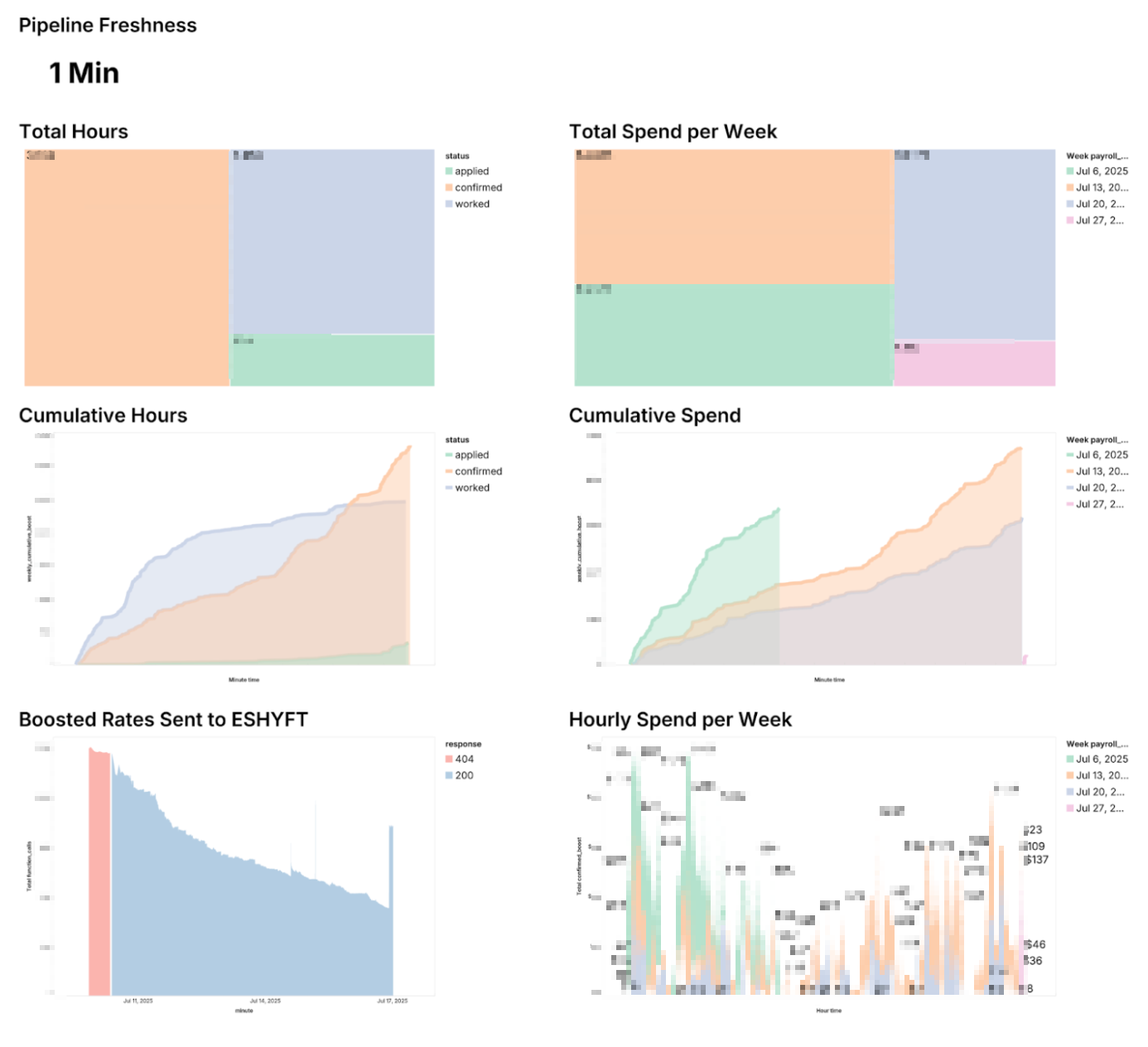
Our roadmap includes launching improved models trained directly on hours worked, scaling intelligent budget allocation, and layering in alternative engagement tactics—all monitored via our live analytics and experimentation dashboards.
Acknowledgments
Special thanks to our data science, engineering, and product teams whose collaboration made launching the "Boosted Rates" system possible.


.webp)